

How Vaccine Schedules Are Tailored to Your Pet’s Risk and Lifestyle
Why Vaccination Is One of the Most Powerful Things You Can Do for Your Pet
If there’s one area of preventive care with a genuinely clear track record, it’s vaccination. Pet vaccinations dramatically reduce the risk of serious, contagious diseases that can affect dogs and cats at any life stage, and the protection they offer is simply not replicated by any other preventive measure. The catch is that immunity does not last indefinitely. Without timely boosters, protection fades, and a pet who was fully vaccinated as a puppy or kitten is not automatically protected years later.
The good news is that staying current does not require guesswork. It requires a veterinary team that takes the time to understand how a pet actually lives and then builds a schedule around that. At Willow Wood Animal Hospital in New Albany, OH, we are AAHA-accredited and follow the most current vaccination guidelines to ensure every recommendation is grounded in the best available veterinary science. Individualized vaccine planning is a core part of wellness care for every patient, from the first puppy visit through the senior years. Contact our practice to get started or to make sure your current vaccine schedule actually fits your pet’s life.
Does Vaccine Timing Really Change Based on a Pet’s Age?
Core Protection from Puppyhood and Kittenhood to the Senior Years
The short answer is yes, and the reason starts early. Puppies and kittens are born with some passive immunity passed from their mothers, but that protection wanes as they develop their own immune systems. By around 16 weeks of age, maternal antibodies have generally dropped low enough that the puppy or kitten’s own immune response needs to take over, which is why the initial vaccine series is structured the way it is.
Serious diseases do not distinguish between young and old patients. Canine distemper can affect dogs of any age, attacking the respiratory, gastrointestinal, and nervous systems with potentially devastating results. Rabies is uniformly fatal once clinical signs appear and is legally required in most places, including Franklin County, for both dogs and cats. Keeping core vaccines current is not optional, and at Willow Wood we build individualized schedules to reflect each patient’s specific risk factors and health history.
How Vaccine Schedules Evolve as Pets Grow
Life stages shape vaccine planning in predictable ways, and understanding those stages helps owners know what to expect at each visit.
Puppies and kittens receive a series of vaccines spaced three to four weeks apart, starting at 6-8 weeks and continuing until 16-18 weeks of age. This spacing exists because a single dose given while maternal antibodies are still present may not produce a full immune response. Gaps in the series leave windows of vulnerability, which is why completing the series on schedule matters.
Young adults who travel, board, or socialize regularly benefit from lifestyle vaccines in addition to core protection. A dog who visits a dog park, attends daycare, or travels to tick-endemic areas has a genuinely different risk profile than one who stays home.
Middle-aged homebodies and senior pets may not need every available vaccine, but maintaining core protection remains important. Core boosters follow three-year schedules after the initial series in most cases, but that still requires tracking.
We pair vaccine planning with preventive screening at annual wellness visits so that the full health picture informs each recommendation. Our wellness plans are a great way to cover your pet’s annual health needs.
Which Vaccines Do All Dogs and Cats Need?
Core vaccines are those recommended for every pet, regardless of lifestyle, because the diseases they protect against are either widespread, severe, or pose a risk to human health. Our vaccine protocols follow the AAHA Canine Vaccination Guidelines and the AAHA/AAFP Feline Vaccination Guidelines, which are the industry standard for the most up-to-date and scientifically proven methods.
Why the Rabies Vaccine Is Non-Negotiable
Rabies vaccine is required by law in Ohio for both dogs and cats, and that requirement exists for good reason. Rabies is transmitted through the saliva of infected animals and is fatal once clinical signs develop. The argument that an indoor pet does not need a rabies vaccine does not hold up: a bat entering the home, a brief escape outdoors, or any unexpected wildlife encounter creates real exposure risk. Franklin County has had 33 confirmed cases of rabies in bats in the last 5 years, and many more go untested. The risk is real.
Core Vaccines Every Dog Should Have
The canine core vaccine series protects against several diseases that veterinary teams see with regularity. Rabies, leptospirosis, and DHPP are the three vaccines included in this category. The DHPP actually covers distemper, two kinds of adenovirus, parvovirus, and parainfluenza. You’ll sometimes find the DHPP listed as DAPP or DA2PP- these are interchangeable.
- Distemper attacks multiple body systems simultaneously, often causing respiratory illness, gastrointestinal symptoms, and neurological complications in the same patient. It can be fatal, and surviving dogs sometimes carry lasting neurological damage.
- Parvovirus is one of the most resilient pathogens in veterinary medicine, surviving for extended periods in the environment. Unvaccinated puppies are at especially high risk, and the disease progresses rapidly. Vaccination is highly protective when completed on schedule. The state of Ohio has seen a significant increase in parvo cases over the past year, and is considered a high-risk state.
- Adenovirus viruscoverage includes two types. The first targets the liver, leading to infectious canine hepatitis, while the second is a respiratory pathogen that contributes to kennel cough.
- Parainfluenza is one of the primary viral contributors to kennel cough, the highly contagious respiratory illness that spreads easily anywhere dogs gather.
- Leptospirosis is a bacterial infection spread through the urine of infected wildlife, including raccoons, deer, and rodents, and it thrives in standing water, flooded areas, and wet soil. It’s not just a country dog problem- puddles on city streets can be just as much of a problem. Because it is also transmissible to people, it carries a public health dimension that makes vaccination important even for dogs with modest outdoor exposure. If your dog sniffs the grass, drinks from a puddle, or encounters wildlife in the yard, leptospirosis is a meaningful and preventable risk.
Core Vaccines Every Cat Should Have
Feline core vaccines cover common viral illnesses that cats encounter, which can cause chronic disease or death. Even if your cat is indoors, vaccines are still important. Many cats that come from outdoor or shelter situations contract viral upper respiratory infections- they’re incredibly common- and vaccination helps lessen the severity of the life-long symptoms. Indoor cats can catch these diseases from something simple as an outdoor cat touching its nose to your window screen.
- FVRCP protects against feline viral rhinotracheitis, calicivirus, and panleukopenia. These diseases cause upper respiratory illness,oral ulceration, eye discharge, and in the case of panleukopenia (sometimes called feline distemper), severe gastrointestinal disease with a high fatality rate in unvaccinated cats.
- Feline leukemia virus(FeLV) vaccination is a core vaccine for all kittens and cats under one year of age. FeLV suppresses the immune system over time and is associated with lymphoma and other cancers. Even cats that will eventually live entirely indoors are vaccinated as kittens because lifestyle can change or your cat could sneak out a door, and early vaccination provides the best immune response.
Which Additional Vaccines Might Your Dog Need?
Lifestyle-based vaccines are chosen based on where a dog goes, what they do, and what they’re exposed to in their region.
- Kennel cough, caused primarily by Bordetella bronchiseptica, spreads rapidly in any setting where dogs are in close contact: boarding facilities, grooming salons, dog parks, training classes, and veterinary waiting rooms. Many boarding and grooming facilities in the New Albany area require it, and the vaccine is recommended for any dog who regularly interacts with other dogs.
- Lyme disease vaccine is a meaningful consideration for dogs who spend time in wooded or high-grass areas of Ohio, where tick populations carry Borrelia burgdorferi. Dogs who hike, hunt, or spend significant time in nature benefit from vaccination alongside tick prevention.
- Therattlesnake vaccine is a less common but relevant consideration for dogs who spend time in rural areas or natural environments where timber rattlesnakes are present. It does not eliminate the need for emergency treatment after a bite, but it can reduce the severity of the venom response and buy critical time.
- Canine influenza spreads quickly in dogs who board regularly or attend doggy daycare, and while it is rarely fatal, it causes significant illness and disruption. Many boarding facilities in the Columbus metro area increasingly recommend or require it.
What About Lifestyle Vaccines for Cats?
Cats with outdoor access or exposure to unfamiliar cats benefit from a different set of considerations beyond the core vaccines.
- TheFeLV vaccine remains relevant for adult cats over one year who go outdoors, encounter stray or community cats, or live in multi-cat households where new animals are occasionally introduced. FeLV spreads through close contact, including mutual grooming and shared food and water bowls.
- Bordetella bronchiseptica in cats is more relevant in high-density environments: shelters, rescue situations, multi-cat households, or any setting where cats are housed closely together.
- Feline chlamydiosis is a bacterial infection that primarily causes conjunctivitis (eye inflammation) and respiratory symptoms, and vaccination is recommended for cats with outdoor exposure or contact with other cats.
If your cat is coughing, sneezing, or has eye discharge, we can run respiratory testing and help sort out whether an infection or an underlying condition is responsible.
What Side Effects Should You Watch For After Vaccination?
Most pets sail through vaccines with no noticeable reaction. The most common responses are mild and temporary: some soreness at the injection site, reduced energy for a day or two, and slightly decreased appetite. These typically resolve within 24 to 48 hours and do not require veterinary attention.
Rare but more serious reactions do occur, and knowing what to watch for is useful. Severe allergic reactions can include facial swelling, hives, vomiting, or collapse. These typically develop within an hour of vaccination and require immediate veterinary attention. If your pet is showing any of these signs after leaving the clinic, call immediately.
For pets with known sensitivities from prior vaccines, we will adjust timing, product selection, or pre-treat as appropriate. Contact the practice before vaccination day if your pet has had a reaction in the past so we can plan accordingly.
Vaccine Visits Are About More Than the Vaccines
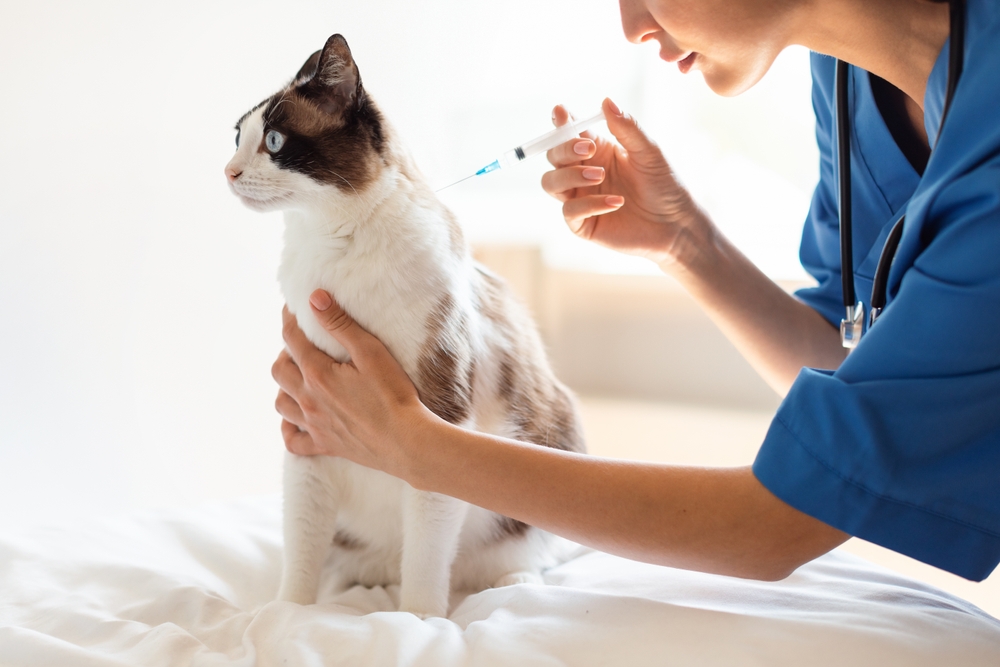
Vaccination appointments are also among the most useful preventive care visits on the calendar, precisely because they provide a reason to examine the pet from nose to tail on a regular schedule. Changes in body condition, heart and respiratory sounds, dental disease, lumps, joint stiffness, and behavioral shifts are all things a veterinary team picks up during a thorough physical exam, often before owners have noticed anything at home.
The conversation that happens during a vaccine visit is just as important. We want to know about lifestyle changes, travel plans, new pets in the household, or shifts in outdoor access so we can update the risk profile that drives vaccine recommendations. A dog who recently started hiking or boarding may need additions to their protocol that were not relevant a year ago. That ongoing communication is how the schedule stays genuinely appropriate rather than just routine.
Our wellness plans are built around exactly this kind of relationship, bundling preventive care exams and core vaccines into a predictable structure, with costs spread across 12 monthly payments. Plans can be upgraded as your pet ages, and all plans include discounts on eligible services and products not already included.
Planning Your Pet’s Vaccine Schedule with a Team That Knows Them
Vaccines remain one of the most cost-effective investments in a pet’s long-term health. The cost of preventing parvovirus, distemper, or leptospirosis is a fraction of the cost of treating them, and no treatment guarantees the outcome that prevention does.
What serves pets best is a schedule that reflects their actual life: where they go, who they encounter, and what risks are relevant in their environment and region. That assessment changes over time, and keeping vaccine planning part of an ongoing conversation rather than a once-a-year transaction is what allows recommendations to stay genuinely individualized.
At Willow Wood, we help every owner find the right fit from our puppy and kitten wellness plans and adult wellness plans so that preventive care is accessible and sustainable at every life stage. Contact our practice to get started or to review your current vaccine schedule.

Leave A Comment