

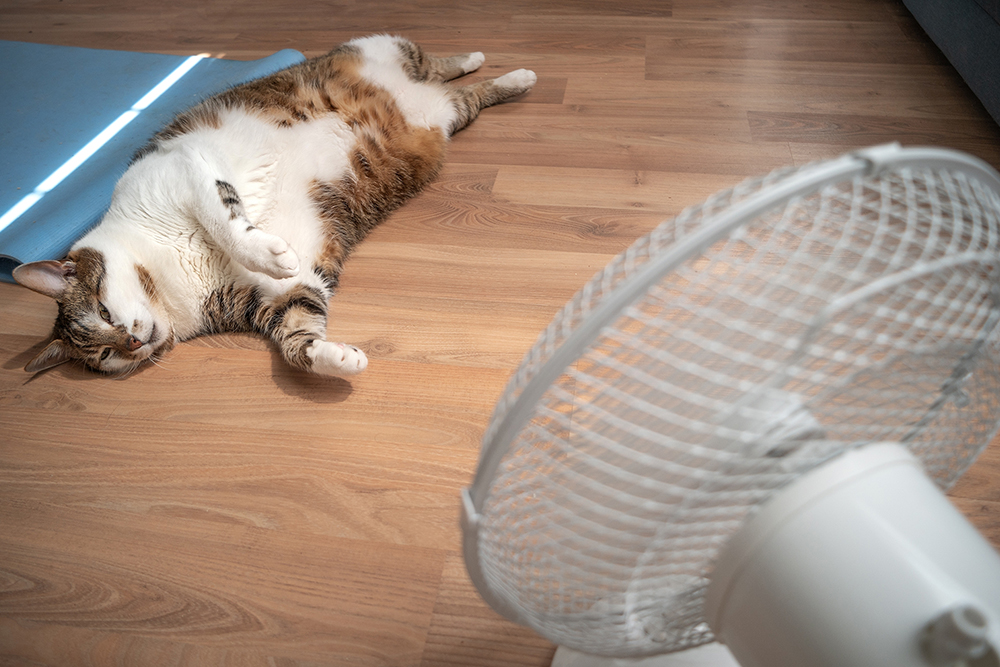
Cooling an overheating pet the right way starts before you reach for water: the sooner you notice your dog is in trouble, the more good your cooling does. When you have to act, use cool tap water on the neck, belly, groin, and paw pads with a fan for airflow, never ice baths or ice-cold water, which make the surface vessels constrict and trap heat in the core. Heat stroke strains the kidneys, blood pressure, and clotting, and a pet who seems to recover after cooling can still be quietly developing internal damage, so home cooling is the first step toward the vet, not a substitute for it.
Willow Wood Animal Hospital in New Albany is AAHA accredited, and we see how fast an Ohio summer afternoon can turn into a heat emergency. Our veterinary services include urgent care during our regular hours and the in-house diagnostics to assess an overheated pet quickly. If your dog has overheated, or you are unsure whether what you are seeing is serious, contact us and we will help you decide what to do next.
What to Know Before the Heat Hits
- The earliest signs, heavy panting that will not slow and a dog seeking cool floors, are your window to act before heat stroke sets in.
- Ohio’s humidity is the hidden danger, because moist air makes panting far less effective at shedding heat.
- Cool (never iced) water plus airflow is the right way to cool; ice traps heat in the core.
- A pet who bounces back after cooling can still develop kidney, liver, or clotting trouble over the next 24 to 72 hours, so a check is always worth it.
What Are the Earliest Signs Your Dog Is Overheating?
The earliest signs are subtle and easy to wave off, which is exactly why they matter, because catching heat stress in the first minutes is what prevents a true emergency. A dog who is starting to overheat pants hard without settling, hunts for cool floors, and slows down before anything looks dramatic. The table below is the early-warning ladder.
| What you notice | What it means | What to do |
| Panting that will not slow with rest | The cooling system is maxing out | Stop activity, move to shade or AC |
| Seeking cool floors, lagging behind | Your dog is trying to self-cool | End the walk, offer water |
| Bright red gums, thick ropy drool | Heat stress is escalating | Begin cooling and call us |
| Wobbliness, vomiting, confusion | Heat stroke is setting in | Cool and head in right away |
The signs of heat stroke in pets become unmistakable: collapse, seizures, gums turning pale or purple, and blood in vomit or stool all mean a true emergency. Cats hide it even better than dogs, so a cat lying flat with an open mouth, breathing in short shallow pants, or hiding somewhere cool needs immediate attention, because open-mouth breathing in a cat is never normal.
Why Does Ohio’s Humidity Make Heat So Dangerous?
Dogs cool themselves mainly by panting, which works by evaporating moisture from the mouth and airway. Humidity is the catch: when the air is already saturated, as it often is during a Midwest summer, that evaporation slows down, and a pet can struggle even when the thermometer does not look alarming. A humid 85-degree Ohio afternoon can be harder on a dog than a dry, hotter day elsewhere.
Some pets start with even less margin:
- Flat-faced (brachycephalic) breeds: bulldogs, French bulldogs, pugs, and Persian cats have narrowed airways that blunt panting. Brachycephalic thermoregulation is tightly linked to body condition, so an overweight flat-faced dog is at the highest risk of all.
- Thick or double coats: northern and working breeds hold heat against the body.
- Puppies and seniors: both regulate temperature less reliably than healthy adults.
- Excess weight: it adds insulation and heat production at once.
- Heart, airway, or endocrine disease: each lowers heat tolerance.
Matching summer activity to the individual dog is part of every wellness visit, where we will check weight, body condition, heart and lung health, and can run blood work to check for endocrine conditions that might make handling the summer sun more difficult.
What Is the Safe Way to Cool Your Dog Down?
Once you see the signs, the aim is to bring the temperature down steadily while you head in, not to fully resolve things first. Follow these emergency steps for cooling:
- Move your dog somewhere cool immediately, indoors with AC if possible, or deep shade with a fan.
- Run cool (not cold) water over the neck, armpits, groin, belly, and paw pads, using tepid tap water or a gentle hose.
- Get air moving with a fan or open windows to speed evaporation.
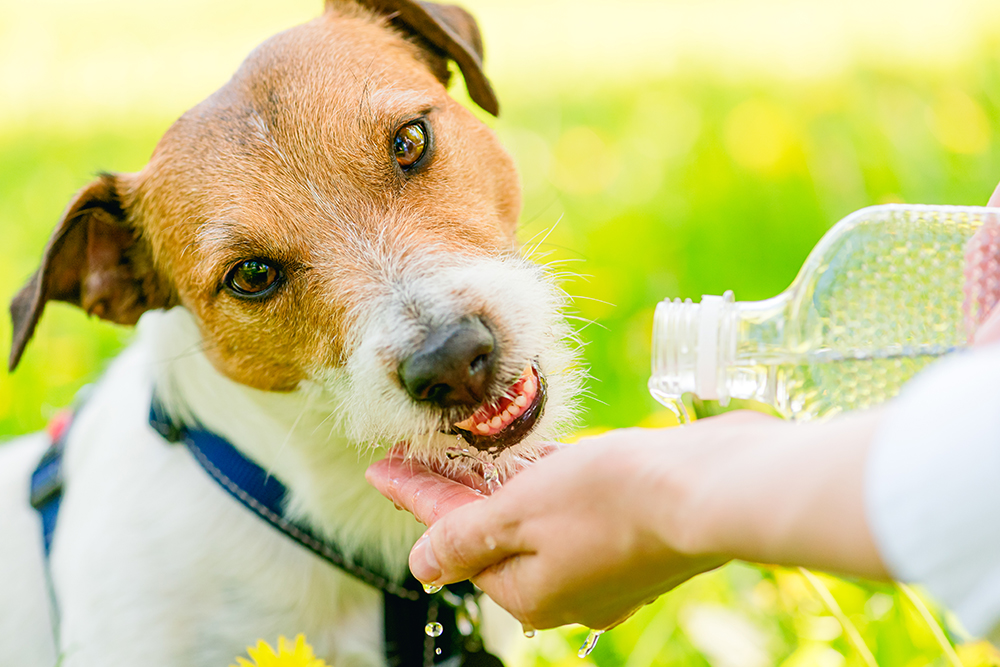
- Offer small sips of cool water only if your dog is alert and able to swallow, and never force it.
- Skip the ice, because ice baths and ice packs constrict surface vessels and trap heat in the core.
- Keep wet towels off the body, since a draped towel holds heat like a sauna.
- Call us and drive in, cooling as you go and stopping near 103 degrees if you can check their temperature safely, so you do not overshoot.
Even if your dog seems to rebound on the way, come in, because the outward picture does not track the internal one.
Does a Pet Who Recovers Still Need to Be Seen?
A pet who recovers still needs to be seen, because the most dangerous effects of heat stroke unfold internally over the following days. Heat stroke treatment runs on three fronts at once: controlled cooling, IV fluids to support circulation and the organs, and close management of the complications that can follow. The first 24 hours carry the highest risk, which is why monitoring matters as much as the initial cooling.
The delayed heat stroke complications we watch for:
- Acute kidney injury: lab values can worsen over 48 to 72 hours.
- Liver damage: enzymes often rise in the days after.
- Gut bleeding: bloody vomiting or diarrhea as the lining sloughs.
- Disseminated intravascular coagulation: a clotting disorder where the body clots and bleeds at the same time.
- Brain swelling and seizures: neurologic signs that can surface after an apparent recovery.
In-house bloodwork lets us track kidney values, liver values, and clotting, and our AAHA-accredited standards mean that diagnostic work and medical care meet the very best defined quality benchmarks. Bringing in any pet who had a real heat scare, even one who looks fine, is the safe call.
How Do You Prevent Heat Stroke on Humid Days?
Prevention is far easier than rescue, and on humid Ohio days it comes down to timing, water, and reading the air, not just the temperature. A few heat safety habits cover most of it:
- Water everywhere: several bowls indoors and out, refilled often, with morning ice to keep it cool.
- Water on every outing: a collapsible bowl and a bottle in the car.
- Cooling spots: a cooling mat or a damp towel on a tiled floor for resting.
- Check the dew point, not just the temperature: a humid 85-degree day deserves the caution of a hotter, drier one.
Preventing heat stroke outdoors is mostly about timing and pavement:
- Walk early morning or after sunset, not in the muggy afternoon
- Press the back of your hand to the pavement for seven seconds; if you cannot hold it, neither can their paws
- Stick to grass and shaded paths, and cut walks short when your dog lags or pants hard
- For flat-faced dogs, skip midday exercise in peak summer entirely
The parked car is the most preventable danger of all. On a warm day a car interior climbs into triple digits within minutes, and hot vehicles kill pets every summer, because cracked windows do nothing meaningful. Leave your dog home if the trip means any time alone in the car, and call us right away if your pet has been shut in one.
How Do You Keep Cats and Indoor Pets Cool?
On the most humid days, indoors with air movement is the safest place for any pet. For outdoor cat safety and indoor comfort:
- Shaded water stations for cats: refreshed twice daily, since heat speeds bacterial growth.
- Cool retreats: tile floors, a shaded porch, or a catio with shade cloth.
- No hot metal: car hoods and metal furniture can scorch paws.
- Keep outdoor cats in: especially during the hottest hours of the day
- AC or fans during peak heat: with cross-ventilation if you do not have AC.
- Frozen treats: plain yogurt in a Kong or low-sodium broth pupsicles, with no xylitol or grapes.
Heat-driven boredom is easier to manage than it sounds. Boredom busters like snuffle mats, puzzle feeders, and scent games keep a pet busy without raising their body temperature, and DIY enrichment toys offer plenty of household ideas.
Frequently Asked Questions About Heat Safety
My Dog Seems Back to Normal After Overheating. Do I Still Need to Come In?
Almost certainly. Heat stroke complications can develop 24 to 72 hours after the event, and kidney injury, liver damage, and clotting problems are invisible from the outside. A quick exam and bloodwork catch trouble early, when it is most treatable. Call us first so we are ready when you arrive.
Can I Shave My Long-Haired Dog or Cat to Keep Them Cooler?
Usually not. Double-coated breeds like huskies and golden retrievers rely on their coat for insulation against heat as well as cold, so shaving can backfire and raise sunburn risk. Brushing out the undercoat helps more, while a single-coated pet with heavy mats sometimes benefits from a sanitary trim. Ask us what suits your pet.
What Temperature Is Too Hot for a Walk in Humid Weather?
Humidity changes the answer. For most dogs, a muggy day above 80 degrees calls for very short walks or none, and flat-faced, senior, or overweight dogs should stay in at even lower temperatures when it is humid. The pavement test and your dog’s panting tell you more than the thermometer alone.
Are Cats Really at Risk for Heat Stroke?
Cats are genuinely at risk, especially seniors, overweight cats, flat-faced breeds like Persians, and cats with heart or airway disease. An indoor cat in a warm, poorly ventilated room is more exposed than people expect. Open-mouth breathing in a cat is always a red flag.
Catching Heat Trouble Before It Starts
Heat stroke is one of the most preventable emergencies we treat, and most of the prevention comes down to catching the early signs and acting on them. Read the panting, respect the humidity, keep water close, and cool the right way if it happens, then come in so we can check what the surface does not show.
If you want a heat plan that fits your specific pet, or your dog has overheated and needs evaluation, reach our team or contact us and we will get you in.

Leave A Comment